
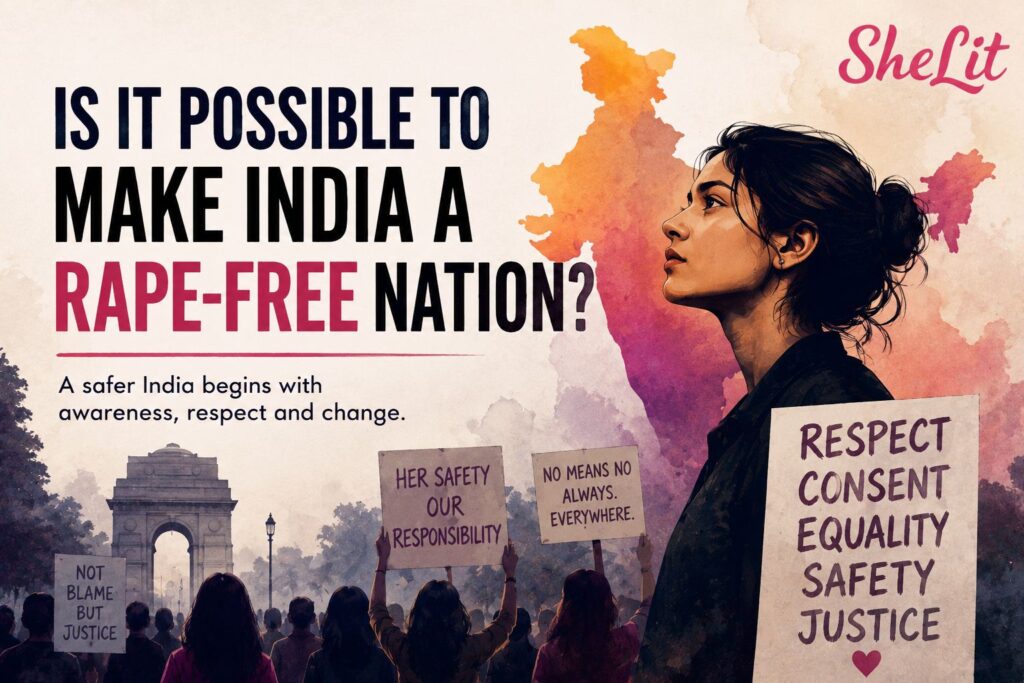
Every time a horrific rape case shocks the country, people demand justice, stricter laws, and stronger punishment. Social media fills with anger, protests begin, and leaders promise change. But after some time, the outrage fades, while the fear many women live with every day remains the same.
Can India Actually Become a Rape-Free Nation?
Completely eliminating crime in a country as large and diverse as India may be unrealistic. However, creating a much safer society for women is absolutely possible. But that change cannot come only from stricter laws or emotional reactions after tragic incidents. It requires deeper social change.
The Problem Is Bigger Than Just Crime
Rape is not only a law-and-order issue. It is also connected to social attitudes, education, culture, and the way society views women.
Many young boys grow up without proper conversations around consent, emotional maturity, and respect for boundaries. At the same time, girls are often taught how to “stay safe,” while society fails to teach boys enough about responsibility and accountability.
A safer India cannot be built only by restricting women. It must also focus on educating men.
The Normalization of Everyday Harassment
One major issue is that many forms of harassment are still treated casually in society. Stalking, vulgar comments, online abuse, and victim-blaming are often dismissed as “normal.”
But when smaller forms of disrespect are ignored repeatedly, society slowly becomes less sensitive toward larger forms of violence.
Creating a safer India begins with refusing to normalize disrespect toward women in everyday life.
Why Stronger Systems Matter
Laws alone cannot solve everything. Faster justice, better policing, survivor support systems, and reducing the fear of reporting crimes are equally important.
Many survivors hesitate to speak up because they fear shame, judgment, or social pressure more than they trust the system.
A society becomes safer when victims feel supported instead of silenced.
Is Change Possible?
Yes, but only through collective effort.
Awareness around women’s safety, consent, and gender equality is growing faster today than before. More people are speaking openly against toxic behavior, and conversations around respect and accountability are becoming stronger.
Real change may take time, but it is possible.
A rape-free India may sound idealistic today, but a significantly safer India is achievable if society treats women’s safety as a national responsibility instead of only a women’s issue.
Real change will not come from one protest or one law. It will come from the way families raise boys, schools teach respect, institutions deliver justice, and society chooses empathy over silence.
Women should not have to reduce their freedom to feel safe.
A truly developed nation is one where women can live without fear.
Saahil Aurora