
Understanding the deeper issues behind a persistent crisis
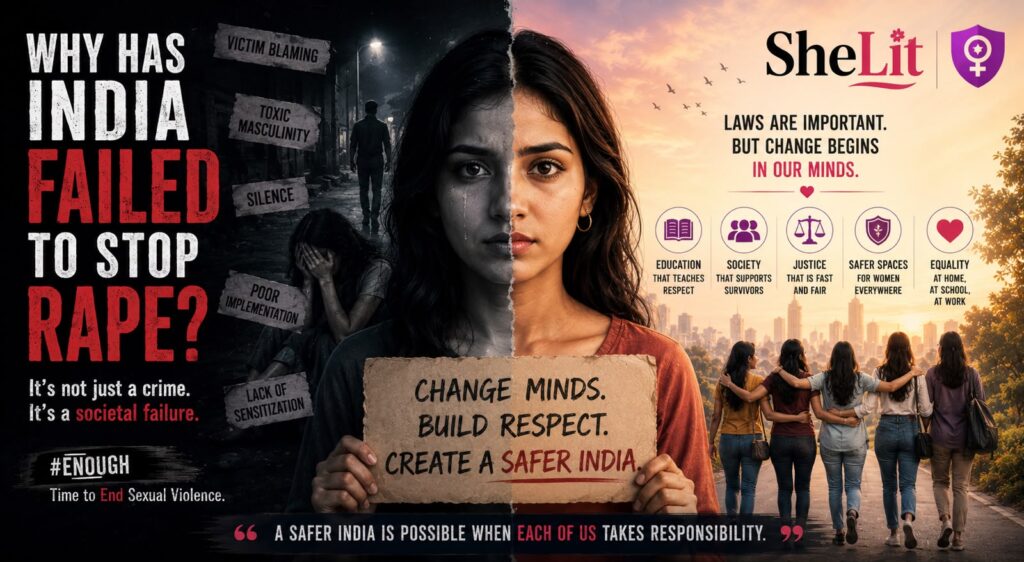
Every time a horrific rape case makes headlines, India responds with outrage. There are protests, demands for stricter laws, and promises of justice. Yet, after the public attention fades, another case emerges, and the cycle repeats. This forces us to ask an uncomfortable but necessary question: Why has India failed to stop rape?
The Problem Is Bigger Than Law
India has strengthened its legal framework over the years, introducing stricter punishments and faster legal procedures for sexual offences. While these laws are important, they cannot solve the problem alone. Rape is not only a legal issue, it is also a social, cultural, and psychological issue. Unless attitudes change, laws can only respond after a crime has already occurred.
The Normalization of Misogyny
Sexual violence does not exist in isolation. It often grows in environments where everyday disrespect toward women is ignored. Sexist jokes, victim-blaming, harassment, stalking, and online abuse are frequently dismissed as “normal.” When society tolerates these behaviours, it creates a culture where women are not treated as equals.
Silence and Fear
Many survivors never report sexual violence because they fear being judged, blamed, or not believed. Social stigma, family pressure, and lengthy legal processes discourage many victims from seeking justice. A society where survivors fear speaking out allows offenders to remain unchallenged.
Education Beyond Textbooks
Schools teach science and mathematics, but conversations about consent, respect, healthy relationships, and gender equality are still limited. Children should grow up understanding that respect for another person’s body, choices, and dignity is not optional, it is fundamental.
Justice Must Be Faster and More Certain
A justice system that is slow or inconsistent weakens public confidence. Strong investigations, timely trials, survivor support, and accountability are essential. Justice should not only be done; it should be seen to be done without unnecessary delay.
Can India Change?
Yes but only if the responsibility is shared by everyone. Families must raise boys and girls with equal values. Schools must promote respect and empathy. Media and influencers must avoid glorifying violence or toxic masculinity. Communities must support survivors instead of questioning them.
Ending sexual violence requires more than punishment after a crime. It requires preventing the attitudes that allow such crimes to happen in the first place.
Final Thought
India has not failed because it lacks laws. It has struggled because changing mindsets is far more difficult than changing legislation. A safer future will depend not only on courts and police, but also on homes, classrooms, workplaces, and communities where respect becomes a daily practice rather than an occasional slogan.
A society becomes safer when respect is taught before fear is experienced. Protecting women is not only the responsibility of the legal system, it is the responsibility of every citizen.