
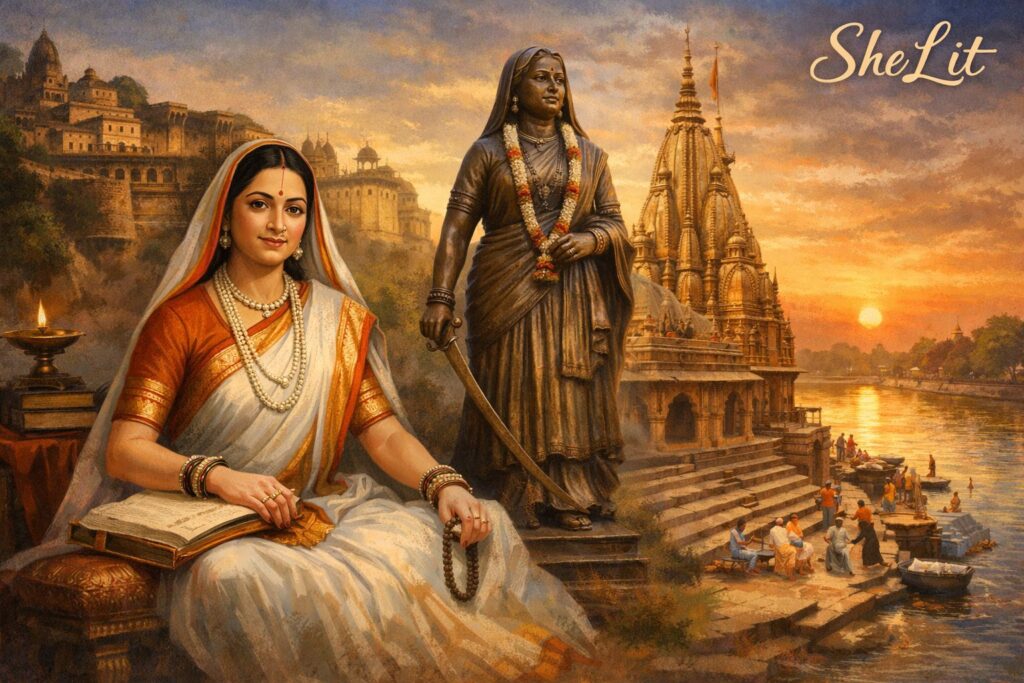
In Indian history, where kings and emperors dominate narratives, Ahilyabai Holkar stands out as a rare example of wisdom, justice, and compassionate governance. Ruling the Malwa kingdom in the 18th century, she redefined leadership not through conquest, but through ethical administration, social welfare, and cultural revival. Her life remains a powerful reminder that effective governance does not require force, it requires integrity.
Early Life: From Ordinary Origins to Extraordinary Leadership
Born in 1725 in the village of Chondi (present-day Maharashtra), Ahilyabai came from a humble background. Her intelligence, calm temperament, and sense of justice were noticed early by Malhar Rao Holkar, the founder of the Holkar dynasty. She later married his son, Khanderao Holkar.
Tragedy struck her life repeatedly, first the death of her husband, then her father-in-law, and later her son. Despite immense personal loss, Ahilyabai refused to surrender to despair. Instead, she rose to lead the kingdom with remarkable courage and clarity.
Ascension to the Throne: Breaking Patriarchal Norms
In 1767, Ahilyabai Holkar assumed the throne of Malwa. At a time when women rulers were rare and often resisted, she proved her legitimacy not by force, but by efficient governance and moral authority. She ruled from Maheshwar, which she transformed into a center of culture, administration, and spirituality.
Her reign challenged the deeply patriarchal belief that women were unfit to rule, she demonstrated that justice and wisdom transcend gender.
Administrative Excellence: Governance with Empathy
Ahilyabai Holkar’s administration was known for fairness, transparency, and accessibility. She personally listened to grievances, ensured swift justice, and kept corruption in check. Taxes were reasonable, farmers were protected, and trade flourished under her leadership.
She believed a ruler’s primary duty was the welfare of the people. Unlike many rulers of her time, she avoided unnecessary wars and focused on internal stability and public well-being.
Temple Restorations: Rebuilding India’s Sacred Geography
One of Ahilyabai Holkar’s most enduring legacies is her extensive work in restoring and rebuilding temples across India. From Kashi Vishwanath (Varanasi) to Somnath, Dwarka, Rameswaram, and Gaya, she funded and supervised temple constructions and renovations.
These efforts were not merely religious acts, they were cultural and civilizational. At a time when many sacred sites had been destroyed or neglected, her work helped revive India’s spiritual and architectural heritage.
Importantly, her patronage extended beyond temples. She built ghats, wells, dharamshalas, and roads, making pilgrimage safer and more accessible for ordinary people.
A Queen Rooted in Dharma, Not Dogma
Ahilyabai Holkar was deeply spiritual, yet remarkably tolerant. Her understanding of dharma emphasized duty, compassion, and justice rather than rigid ritualism. She respected diverse traditions and ensured harmony within her kingdom.
Her personal life was marked by simplicity, she lived modestly, avoided extravagance, and viewed power as a responsibility, not a privilege.
Legacy: A Model of Ideal Governance
Ahilyabai Holkar passed away in 1795, leaving behind a legacy that continues to inspire scholars, leaders, and reformers. She is remembered not just as a queen, but as a philosopher-ruler, whose governance blended morality with practicality.
For women today, especially in leadership, politics, and public life, Ahilyabai Holkar remains a timeless role model. She proves that strength lies not in dominance, but in justice, empathy, and service.
Why Ahilyabai Holkar Matters Today
In an age of power struggles and loud leadership, Ahilyabai Holkar reminds us that quiet integrity can shape history. Her life aligns perfectly with the spirit of SheLit, celebrating women who shaped society through wisdom, courage, and conscience.
She was not just a ruler of her time; she is a guide for ours.